

Osteopore Droneball – PC51 porous PCL scaffold
A dome-shaped porous PCL scaffold, model PC51 (13,8,4,6), measuring 13 × 8 × 4 × 6 mm. Its interconnected architecture provides space for tissue ingrowth.
Catalog OsteoporeLegal documentsExplore configurations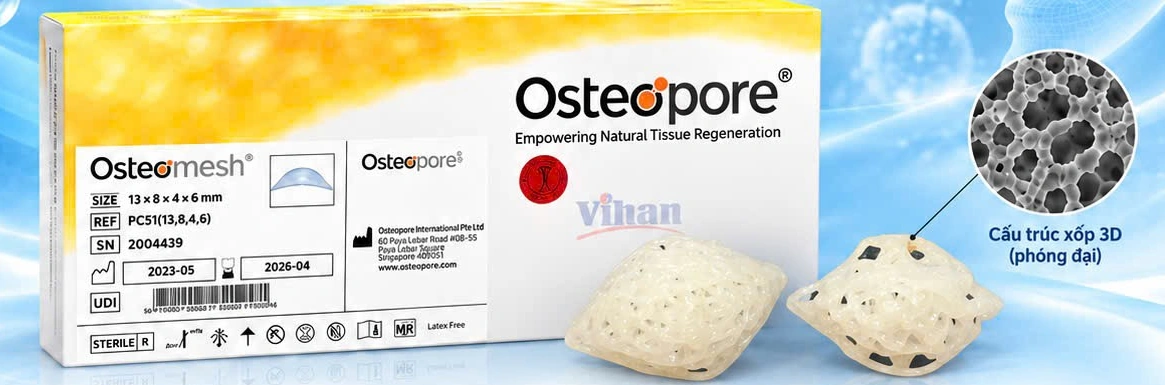
Design and application
A dome-shaped porous PCL scaffold, model PC51 (13,8,4,6), measuring 13 × 8 × 4 × 6 mm. Its interconnected architecture provides space for tissue ingrowth.
Droneball has dome-shaped geometry with length, width, depth and height dimensions. PC51 (13,8,4,6) identifies this configuration on the packaging.
Droneball does not share the 11 × 7 × 3 mm dimensions of Anatomic Tipball. Quote PC51 and 13 × 8 × 4 × 6 mm when requesting information.
- Dome-shaped scaffold
- Structural scaffold support according to local indications
- 3D-printed PCL with interconnected pores
5Product specifications
| Product group | Dimensions (mm) | Product model |
|---|---|---|
| Osteopore Droneball – PC51 porous PCL scaffoldProduct details | 13 × 8 × 4 × 6 Dome-shaped scaffold | |
PCL Twin dimensions apply to each plate. Droneball PC51 has four dimensions: length × width × depth × height. Contact Vihan for the required model and configuration.
- Model
- PC51 (13,8,4,6)
- Dimensions (mm)
- 13 × 8 × 4 × 6
- Material
- Polycaprolactone (PCL)
- Manufacturer
- Osteopore International Pte Ltd, Singapore
PCL material and 3D-printed architecture
Polycaprolactone (PCL) is a biodegradable polymer. 3D printing produces a scaffold with interconnected pores rather than a solid implant.
Open pores provide space for tissue ingrowth. Degradation occurs gradually and depends on material, placement and individual response.
Identifying Droneball PC51
Droneball has dome-shaped geometry with length, width, depth and height dimensions. PC51 (13,8,4,6) identifies this configuration on the packaging.
Droneball does not share the 11 × 7 × 3 mm dimensions of Anatomic Tipball. Quote PC51 and 13 × 8 × 4 × 6 mm when requesting information.
Professional selection and handling
These implants are used by appropriately qualified clinicians. Size, tissue coverage and fixation are selected following individual assessment.
Check the model, packaging integrity and expiry date before use. Follow the supplied instructions for indications, contraindications, storage and handling.
4Scaffold structure and mechanism
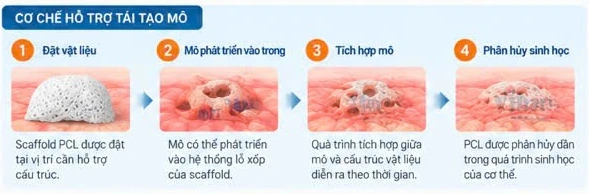
From porous structure to tissue integration
- The scaffold is placed at the required support site.
- Interconnected pores provide space for tissue ingrowth.
- Tissue gradually integrates with the scaffold.
- PCL biodegrades at a rate that depends on placement and the individual case.
Frequently asked questions
How is this configuration identified?
PC51 (13,8,4,6). Dimensions: 13 × 8 × 4 × 6 mm.
Is PCL a permanent implant material?
PCL biodegrades gradually. A fixed resorption time cannot be applied to every implantation site and patient.
How do I request the correct configuration?
Provide the product name, model, dimensions and quantity when contacting Vihan. The team can assist with availability and professional documentation.
Droneball PC51 literature
Product imagery and information supplied by Vihan.